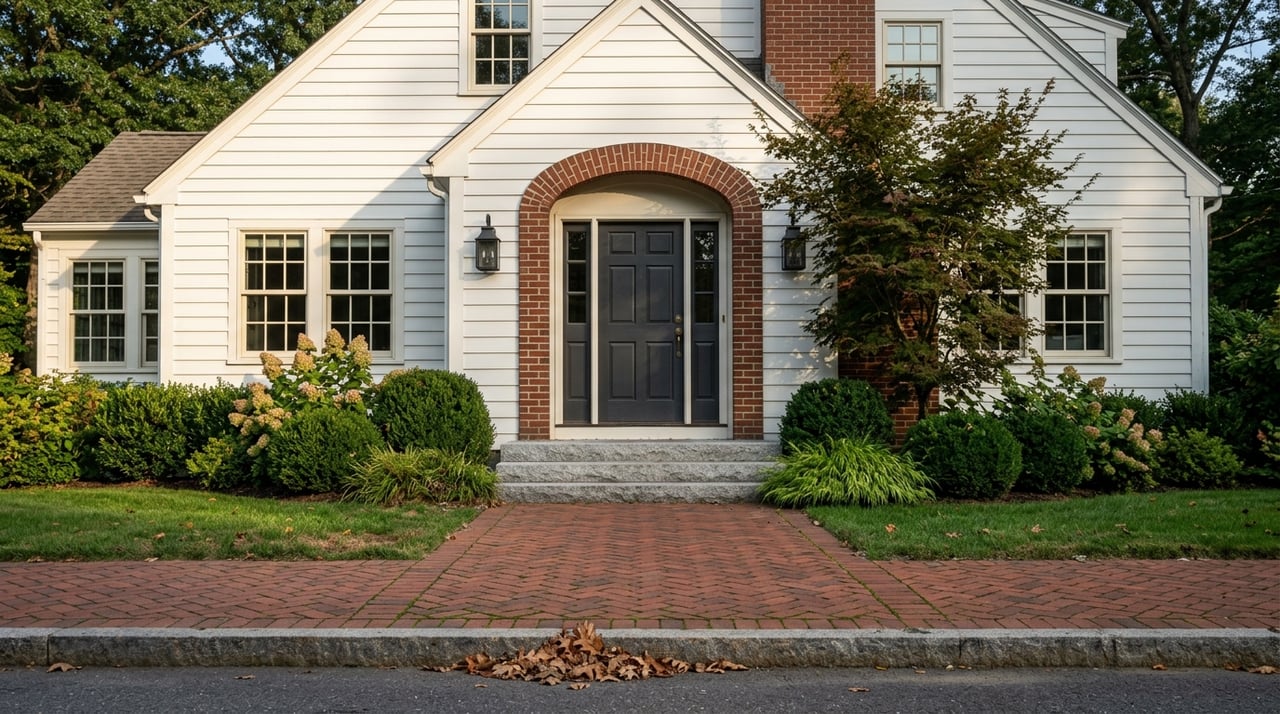
Needham vs Dedham MA: Compare Commute, Schools & Lifestyle
April 2, 2026
April 2, 2026
Choosing between Needham and Dedham can feel surprisingly tough. Both towns sit in Boston’s southwest suburban corridor, both offer commuter access, and both attract buyers who want more space than the city often provides. If you are trying to decide where your budget, commute, and day-to-day lifestyle will fit best, this comparison will help you sort through the tradeoffs clearly. Let’s dive in.
If you want the short version, Needham is generally the higher-priced, more owner-occupied, and more school-driven option, while Dedham is typically the more affordable and housing-diverse choice.
According to the U.S. Census QuickFacts, Needham’s 2020 to 2024 median owner-occupied home value was $1,188,500, compared with $630,400 in Dedham. Needham also had a higher owner-occupied rate at 83.1%, while Dedham came in at 72.7%. Those numbers alone tell you these towns can feel very different from a buyer’s perspective.
School district size and published outcomes also differ. Needham Public Schools is a larger PK-12 district with 8 schools and 5,493 students, while Dedham Public Schools has 7 schools and 2,668 students. On graduation data, Needham’s latest district report shows a 98.3% four-year graduation rate for the 2024 cohort, while Dedham’s latest statewide district table shows 88.8% in the 2025 report, according to the Massachusetts DESE graduation reports.
For many buyers, the commute is where the decision starts to get real. A town can check every box on paper, but if getting to work, school, or appointments feels harder than expected, that matters fast.
Needham is about ten miles southwest of Boston, according to the town’s FY2026 proposed annual budget. The same town profile notes access to Routes 128 and 135 and Interstate 95, plus commuter rail service to Back Bay and South Station through four stations in town.
That larger in-town rail footprint is a meaningful advantage if you want flexibility. If access to more than one commuter rail stop inside town matters to you, Needham stands out as the more rail-oriented option based on the town’s own transportation description.
Dedham also offers commuter rail access, but its transit setup reads differently. In Dedham’s MBTA Communities announcement, the town identifies itself as a commuter rail community because of Dedham Corporate Center and Endicott stations.
The same planning material shows a strong focus on transit-oriented zoning around Dedham Corporate Center, an area the town highlights for its proximity to I-95 and shopping. In practical terms, Dedham may appeal more if you like being close to major roadways and commercial conveniences, with rail access centered around a smaller number of station areas.
If schools are part of your decision, it helps to stay grounded in published data and think about what matters most to your household. Some buyers prioritize district size and structure. Others focus on performance indicators or the feel of a smaller system.
Needham Public Schools is the larger district by enrollment. On the state curriculum dashboard, the district shows 5,493 students across 8 schools.
Needham’s latest available district graduation report shows a 98.3% four-year graduation rate for the 2024 cohort, based on Massachusetts DESE data. If your search is heavily influenced by published school outcome metrics, Needham has the stronger reported profile in the data provided.
Dedham Public Schools is smaller, with 2,668 students across 7 schools on the same state district dashboard. That smaller scale may appeal to buyers who prefer a more compact district structure.
Dedham’s latest statewide graduation table shows an 88.8% four-year graduation rate in the 2025 report. Because the Needham and Dedham graduation figures come from different report years, this is best read as a directional comparison, not a strict same-cycle ranking.
This is often where buyers see the clearest contrast. Needham and Dedham are not just different in price. They also differ in the kinds of homes you are more likely to find and what carrying costs may look like.
Needham is still heavily single-family in its housing makeup. The town’s 2022 housing plan reports 8,413 single-family homes, 988 condos, 197 two-family homes, 12 three-family properties, and 31 properties with four units or more.
That same report notes that from 2010 to 2020, Needham added 720 housing units, but only 19 net single-family homes. Most new units came in multifamily buildings of three units or more, even though the town remains predominantly single-family overall.
On pricing, the U.S. Census QuickFacts for Needham show a median owner-occupied value of $1,188,500 and a median gross rent of $2,409. For many buyers, that places Needham firmly in the higher-end suburban category.
Dedham offers a more mixed housing profile. In the town’s open space and recreation plan, 67.6% of occupied housing units were single-family homes, 14.3% were 2 to 4-family homes, and 17.9% were multifamily homes with more than 4 units. The plan also notes that 30.9% of occupied units were renter-occupied.
That mix can create more options for buyers looking at different price points or property styles. Condos, multifamily housing, and a wider spread of housing types can make Dedham feel more flexible if you are balancing budget with location.
The U.S. Census QuickFacts for Dedham show a median owner-occupied value of $630,400 and a median gross rent of $2,058. For buyers comparing entry cost alone, Dedham is notably lower.
Tax rates can be misleading if you look at the rate without looking at home values. Needham’s FY2026 residential tax rate is $10.83 per $1,000, while Dedham’s FY26 residential tax rate is $12.30 per $1,000.
At first glance, Dedham looks more expensive on taxes because the rate is higher. But the typical tax bill tells a different story. Needham’s FY2025 average single-family home tax bill was $15,522.62, while Dedham’s FY26 average single-family home tax bill was $9,973.71.
The takeaway is simple: Dedham has the higher tax rate, but Needham has the higher typical tax bill because home values are much higher. If you are budgeting monthly costs, this is a key piece of the comparison.
Commute and cost matter, but so does how a town feels when you live there. The shape of the town center, housing pattern, and public planning goals can influence your day-to-day experience more than many buyers expect.
If you want a classic downtown atmosphere, Dedham has a strong case. The town describes Dedham Square as a traditional New England town center that developed around a former train station, with historic architecture, civic institutions, and more than 20 family-owned restaurants and retailers.
That gives Dedham a more established town-square identity. For buyers who care about having a recognizable, walkable center with local businesses and civic character, Dedham may feel like the more natural fit.
Needham Center has a different story. Through the town’s Envision Needham Center initiative, Needham is actively working toward a more vibrant, sustainable, and resilient destination, with Town Hall and Town Common identified as the visual and historic anchor.
That suggests a civic core that is intentional and still evolving. If you like a polished suburban setting with a strong municipal focus and a more controlled center, Needham may align better with your preferences.
Dedham’s planning documents also note that parts of town, especially west of Providence Highway, still retain wooded land and a more rural feel even as the town approaches buildout. That mix of established center, varied housing, and pockets of less dense character can appeal to buyers who want variety within one town.
Needham, by contrast, reads more consistently as an affluent, mostly single-family suburban environment. If you are looking for that specific kind of residential pattern, it is easier to see why Needham often lands on move-up buyers’ short lists.
The better town is not the same for every buyer. The right choice depends on which tradeoffs matter most to you.
For many buyers, the decision comes down to this: Needham tends to win on school metrics, rail access, and prestige positioning, while Dedham tends to win on affordability, housing mix, and traditional downtown atmosphere.
When you compare Needham and Dedham side by side, you are really comparing two different versions of suburban living near Boston. Needham offers a higher-priced, more owner-occupied, school-focused profile with broader in-town rail access. Dedham offers a lower cost of entry, a more mixed housing stock, and a town center with an established historic identity.
If you are trying to decide which town fits your budget, commute, and goals, a local strategy matters. The right home is not just about the town name. It is about how the property, location, and monthly cost work together for your life. If you want help weighing Needham against Dedham or narrowing your search in Greater Boston and MetroWest, connect with Edith Paley for thoughtful, responsive guidance.
Stay up to date on the latest real estate trends.
Edith will be your advocate. Whether buying or selling or both, she will work tirelessly to promote your best interests. When orchestrating deals, Edith is assertive and effective without being too aggressive.