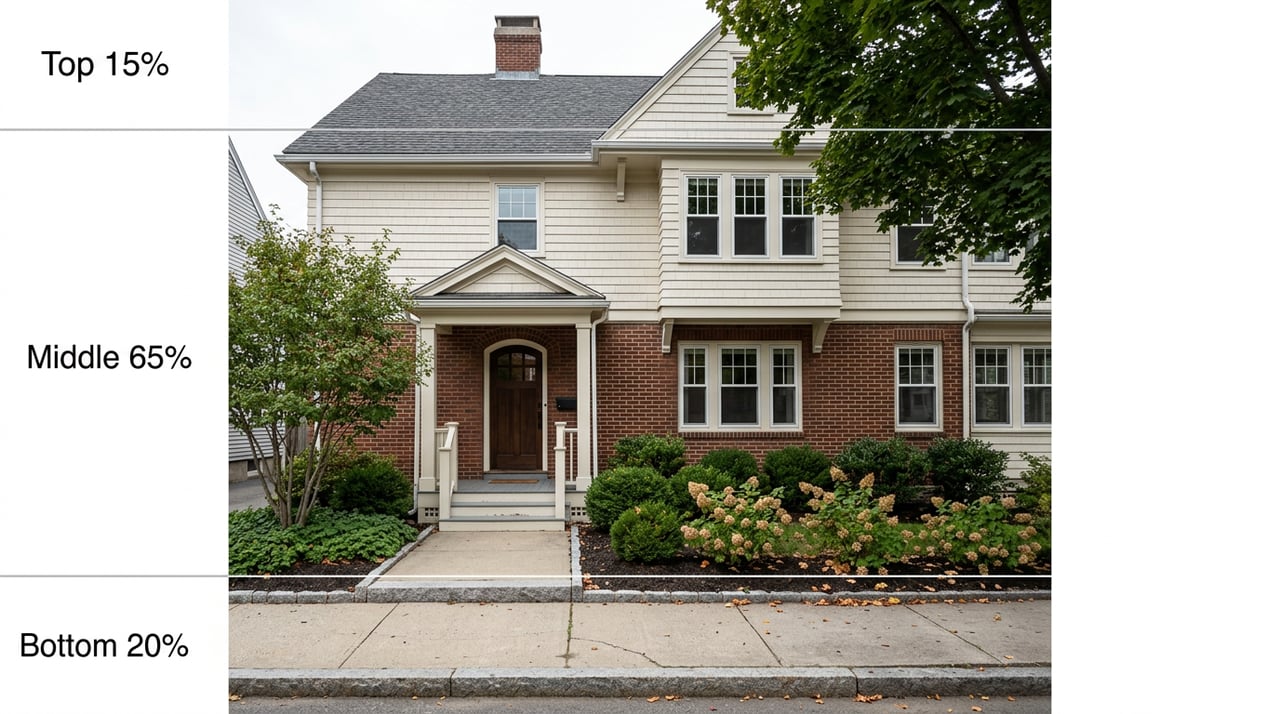
Worcester MA Real Estate Investing for Boston Commuters
March 24, 2026
March 24, 2026
Wondering if you can trade Boston prices for more space without giving up your career in the city? If you work in or around Boston but only head in a few days a week, Worcester might be the value play you’ve been looking for. You’ll see how Worcester stacks up on price, what the commute really takes, who rents and buys here, and the key risks to consider before you move. Let’s dive in.
If you feel priced out of Boston’s close-in suburbs, Worcester often delivers a larger home or even a small multifamily at a much lower entry point. Recent aggregator snapshots show Worcester’s city median in the mid-$400Ks, while Boston sits in the upper $700Ks to $800Ks. That affordability gap is why many buyers look west when they want more space or a yard.
Be careful comparing city vs. county numbers. Worcester County includes higher-priced suburbs that push the median up, so check the exact area you care about. Inventory across Central MA has stayed tighter than national averages, and while price growth cooled from the 2020–2022 surge, steady demand continues to support the market.
Worcester can work well for hybrid commuters. If you need a guaranteed sub-60-minute daily trip both ways, set expectations carefully and verify schedules before you buy.
The MBTA Framingham/Worcester Line runs from Union Station in Worcester to Boston. Scheduled trips vary, and many runs clock around 75 to 95 minutes, with some express options at select times. Review the line overview and timetable patterns on the Framingham/Worcester Line page and this detailed schedule analysis before you plan a daily routine.
A new high-level center platform opened at Union Station on July 1, 2024. This upgrade improves capacity and can reduce dwell times, laying groundwork for more reliable and potentially more frequent service. Learn more about the project from coverage of the center-platform opening.
Worcester sits roughly 40 miles west of Boston by road. Off-peak drives can land near 45 minutes, while rush hour often stretches well past an hour. If you can mix rail and driving or work from home several days each week, the combination is often very workable. You can confirm distance and context on the Worcester overview.
MBTA commuter-rail fares are distance-based, and Worcester is in a farther zone than MetroWest suburbs. Check the MBTA’s current fares and pass options when you compare costs. Union Station’s attached garage offers convenient parking, though peak times can be busy.
Worcester’s economy and institutions create steady housing demand. Multiple higher-education campuses, including WPI, Clark, Holy Cross, Worcester State, UMass Chan Medical School, and Quinsigamond Community College, help support consistent need for rentals and starter homes. You can see the city’s institutional landscape on Worcester’s Quick Facts.
Healthcare is a major employment base, anchored by UMass Memorial and UMass Chan, which supports demand from medical staff and faculty. HUD’s market analysis for the region highlights education and health services as key sectors for the area’s economy; review the Worcester CHMA report for context.
Downtown investments also add appeal. Projects around the Canal District, Polar Park, and Union Station, along with new market-rate apartment buildings, bring more urban amenities. For example, a developer purchase tied to a planned 185-unit Canal District project signals ongoing interest in central neighborhoods, as reported by the Worcester Business Journal.
A common entry play is the classic New England triple-decker or a 2–4 unit multifamily. These properties often provide a lower cost per unit than many Boston-area options and can work for owner-occupants or small investors. The Worcester metro has shown tight rental demand and low vacancy in recent years, which supports income strategies for well-located properties; see a roundup of market conditions from this industry update.
Observed cap rates on small multifamily deals have often landed in the mid-to-high single digits in 2024–2026, which is part of the draw versus Boston. Still, cap rates are only a starting point. Always verify rents, expenses, taxes, insurance, and deferred maintenance before you underwrite a deal.
Consider your weekly routine and financial goals:
In short, Worcester is often a smart buy for hybrid commuters, cost-conscious buyers, and thoughtful small investors who are comfortable with older homes and a longer trip on in-office days.
If you are weighing space, commute, and long-term value, you do not have to figure it out alone. Work with a local advocate who understands MetroWest and Worcester County and can tailor a plan to your schedule and goals. Reach out to Edith Paley for a friendly, data-backed strategy and next steps.
Stay up to date on the latest real estate trends.
Edith will be your advocate. Whether buying or selling or both, she will work tirelessly to promote your best interests. When orchestrating deals, Edith is assertive and effective without being too aggressive.