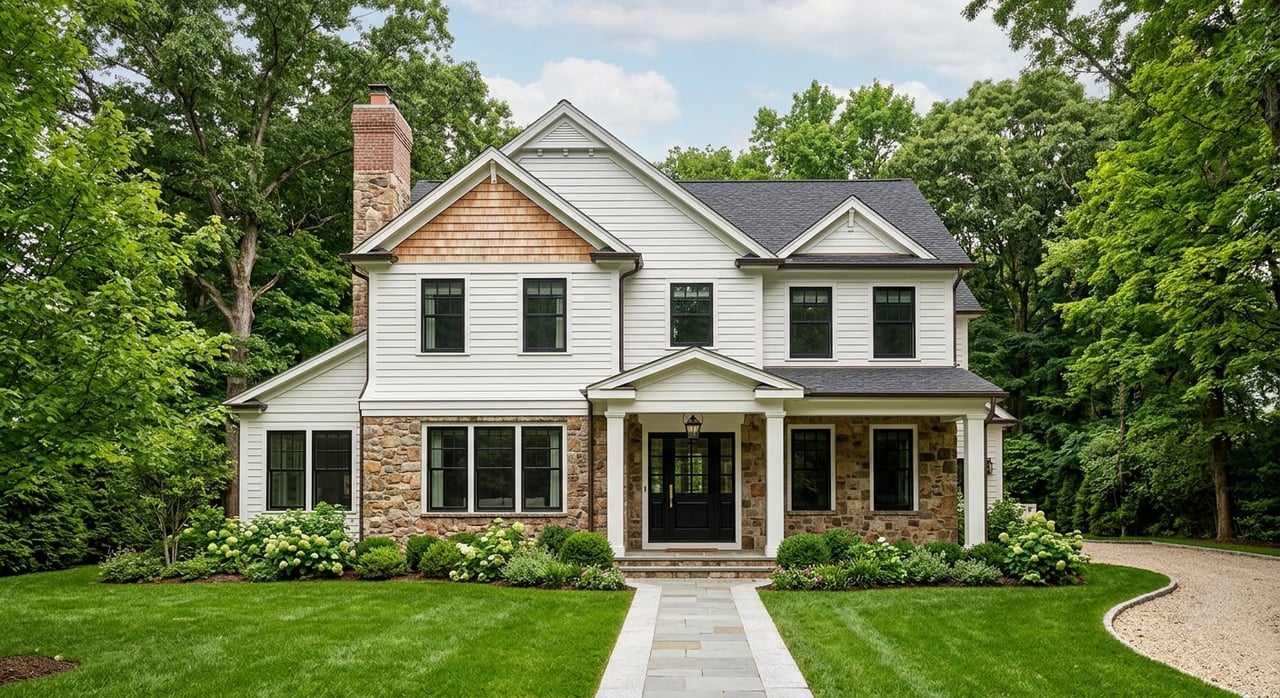
Northborough MA For Move-Up Buyers
June 25, 2026
June 25, 2026
If you feel squeezed by your current home, Northborough may be the kind of move-up market worth a closer look. Many buyers want more square footage, a bigger yard, and a layout that fits how life actually works now, but they also want a location that still keeps Worcester and Greater Boston routes within reach. In Northborough, the housing mix, lot standards, and road access all support that next-step decision. Let’s dive in.
Northborough reads more like a classic move-up suburb than a starter-home market. Current ACS and Census data show 15,750 residents, 5,929 households, a median age of 45, a median household income of $153,199, and a median owner-occupied home value of $620,000. That overall profile points to a town where many households are established and owner-focused.
The housing stock also helps explain the appeal. QuickFacts reports an 83.1% owner-occupied housing unit rate, and Census Reporter shows that 83% of the housing stock is made up of single-unit structures. If you are hoping to trade up into a more traditional detached-home setting, Northborough offers a strong factual case.
The town’s planning documents add more context. Northborough’s 2020 Master Plan said that, in 2016, about 69% of housing units were single-family homes, while condominiums made up 12.2% and 2- to 3-unit buildings made up 4.8%. The same plan noted that apartment and condominium development is generally concentrated along and near Route 20.
For many move-up buyers, the goal is simple: more room inside and more breathing room outside. Northborough’s zoning standards support that story in a very practical way. Minimum lot sizes for single-family homes are large by suburban standards in several districts, which helps shape the town’s lower-density, detached-home feel.
Here is a quick look at some of the town’s minimum lot and frontage standards for single-family zoning districts:
| Zoning district | Minimum lot area | Minimum frontage |
|---|---|---|
| Residence A | 80,000 sq ft | 200 ft |
| Residence B | 40,000 sq ft | 150 ft |
| Residence C | 20,000 sq ft | 100 ft |
| General Residential | 15,000 sq ft | 100 ft |
| Main Street Residential | 15,000 sq ft | 100 ft |
| Downtown Neighborhood | 10,000 sq ft | 50 ft |
Those standards do not guarantee the same experience on every street, of course. Still, they help explain why Northborough often attracts buyers who want more privacy, more yard space, or simply a less compact setting than they have now.
Northborough’s planning records also give a useful snapshot of how home layouts have differed across eras. The town’s 2012 housing plan said newer homes averaged 3,335 square feet, often with four or more bedrooms on 1.24-acre lots. Older homes built from 1920 to 1950 averaged 1,560 square feet, with two to three bedrooms on about 0.71-acre lots.
That does not mean every newer home is large or every older home is compact. It does mean Northborough has a documented pattern of more spacious newer housing alongside smaller and more varied older homes. If you are moving up from a condo, townhouse, or tighter single-family home, that range can create more options depending on whether you value size, character, or both.
A move-up purchase is not always just about today. Sometimes you are planning for guests, extended family, a home office, or a longer-term living setup that can adapt over time. Northborough allows accessory dwelling units, with a maximum gross floor area of 800 square feet and an owner-occupancy requirement.
That local rule adds another layer of flexibility for some buyers. You may see value in a property that offers room for multigenerational use or a future downsizing option while staying on the same property. For buyers thinking several years ahead, that can matter just as much as the main home’s bedroom count.
Northborough is not one-note. The town’s 2020 Master Plan said most parcels were developed between 1960 and 1999, with pre-1940 homes scattered through town and a small concentration near Downtown Main Street. It also said new housing built since 2000 is spread out geographically, suggesting a mix of infill and subdivision development rather than one single new-home pocket.
That matters because your experience can vary depending on what kind of move-up lifestyle you want. Some areas may offer the larger-lot feel many buyers picture when they think about trading up, while others may feel more compact or mixed in housing style.
The same Master Plan noted that larger properties and farms are mostly north of I-290 and near the western border. Higher-density residential uses are more concentrated to the south. If you are comparing homes in different parts of town, this broad pattern can help you understand why one location may feel more spacious and another may feel more connected to busier corridors.
Northborough’s legacy housing stock leans heavily toward detached homes, but future supply may not look exactly the same. The town’s MBTA Communities overlay is located near downtown or other redevelopment areas. The state’s December 10, 2024 compliance determination said the district covers 59.2 acres with an estimated 886 units of as-of-right multifamily capacity at 16.3 units per acre.
For move-up buyers, this does not replace the town’s established single-family character. What it does suggest is that some future housing may be more townhouse- or multifamily-oriented than older Northborough inventory. Over time, that could create more housing variety in select areas while leaving much of the town’s existing residential pattern intact.
If you are moving up for more space, commute tradeoffs usually come with the territory. Northborough sits about 10 miles northeast of Worcester and about 30 miles west of Boston, according to the town’s open-space and recreation plan. Major highways shaping access include I-290, Route 9, Route 20, I-495, I-90, and I-190.
The same town plan says I-290 runs through the northern section of town, linking I-90 and I-495. Route 9 crosses a small portion of the south, and Route 20 runs through the town center. In practical terms, Northborough works more as a car-oriented commuter base with multiple route options than as a rail-first suburb.
Current ACS data show a 31-minute mean travel time to work. For many move-up buyers, that can be a reasonable exchange for more house, more land, and a more traditional suburban layout.
Northborough’s strongest case is not that it is the cheapest place to buy. The data support a different story. This is a town where you may be able to gain detached-home living, larger lots, historically roomier layouts, and solid highway access to Worcester and the MetroWest and Boston corridors.
That makes Northborough especially relevant if your current home no longer fits your day-to-day life. You might be looking for a larger kitchen, an extra bedroom, a dedicated office, a bigger yard, or a property that gives you more flexibility in the years ahead. Northborough’s housing mix and development pattern make it a town worth considering if those goals are at the top of your list.
If you are weighing a move-up purchase in Northborough, local guidance can make the search much more efficient. The right strategy is not just about finding more space. It is about finding the right kind of space, in the right part of town, with a plan that fits your budget, timing, and long-term goals. When you are ready to talk through your next move, connect with Edith Paley.
Stay up to date on the latest real estate trends.
Edith will be your advocate. Whether buying or selling or both, she will work tirelessly to promote your best interests. When orchestrating deals, Edith is assertive and effective without being too aggressive.