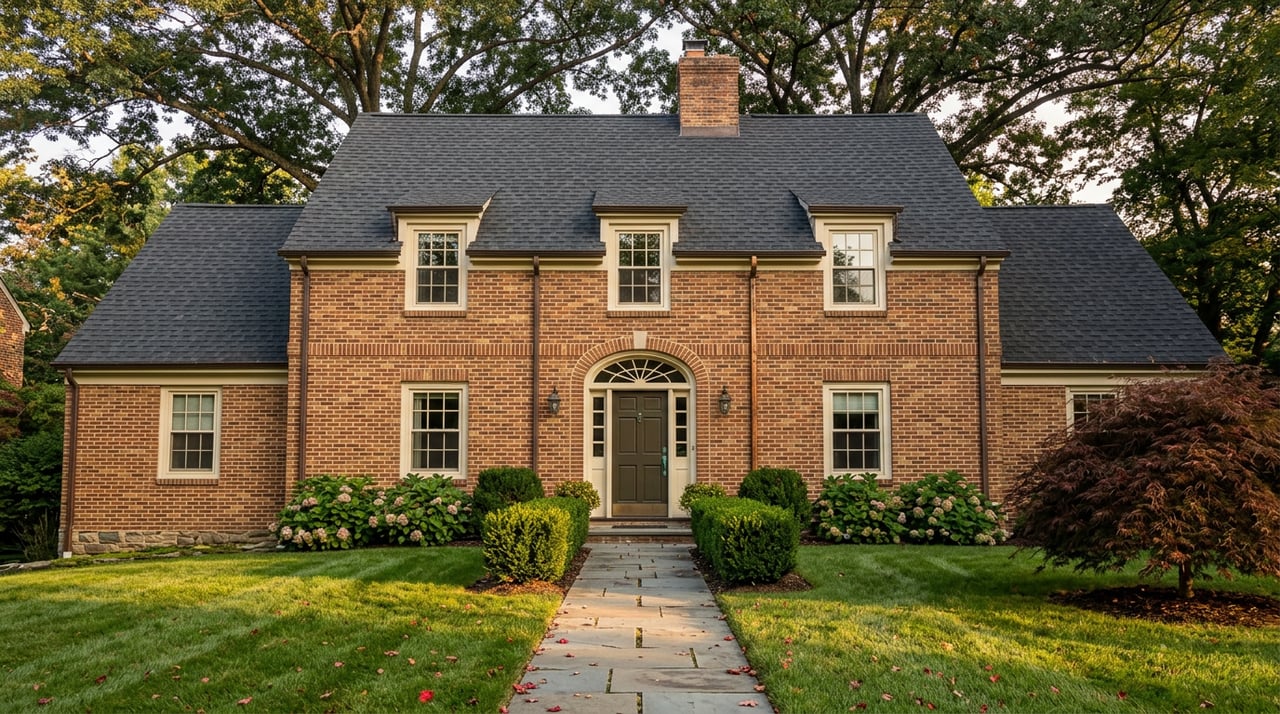
Why Newton's Median Home Price Doesn't Match the House You're Touring
September 24, 2026
September 24, 2026
How does a single city produce a median home price that neither of the two houses you toured last Saturday comes close to matching?
That's the question most buyers ask themselves somewhere around their third weekend touring Newton. The condo in Newton Corner priced in the low $1.1 millions and the colonial in Waban pushing past $2.5 million are both, technically, "the Newton market." Both sit inside the same city line. Both feed the same school system. Both show up in the same citywide median when a portal reports it. And neither one looks anything like the number you saw online.
The reason isn't a data error. It's that Newton was never built as one market. It was built as thirteen villages, each with its own train stop, its own commercial strip, and its own pricing logic, and the citywide median is just the average of all thirteen stacked together.
Newton Public Schools serves every village the same way. A family in Nonantum and a family in Waban are assigned by address, not by budget, and both get the same city trash pickup, the same library card, the same municipal services. What differs, sharply, is what the real estate market charges for the address itself.
Based on sale data from late 2025 and into 2026, four rough tiers show up consistently:
| Tier | Villages | Typical single-family range | What the price is buying |
|---|---|---|---|
| Entry | Newton Corner, Nonantum, Newton Upper Falls, Newton Lower Falls | roughly $1.1M–$1.3M | Full city services and schools, less walkability, mostly bus or car access |
| Mid | Auburndale, Newton Highlands, West Newton, Newtonville | roughly $1.4M–$1.7M | Commuter rail or Green Line access, walkable village centers |
| Premium | Newton Centre, Waban | roughly $1.8M–$2.6M | Fastest transit branch, larger lots, the most walkable centers in the city |
| Top | Chestnut Hill | $2M and climbing toward $2.75M on listings | The largest lots and the most exclusive addresses in Newton |
Condos sit underneath all of this. Citywide, condo medians were tracking near $735,000 in the first quarter of 2026, which is often the more realistic entry point for a buyer who wants a Newton address without a single-family budget.
Since the schools and services don't change village to village, the price gap is a transit and walkability story, not an education story.
Newton has two rail systems running through it, and which one reaches your street matters more than almost anything else on the price sheet:
Line up the price tiers against that list and the pattern holds. Waban and Newton Centre sit on the fast D branch and carry the highest prices. Auburndale and Newton Highlands split rail access between the two systems and land in the middle. Newton Corner and Nonantum skip rail entirely and anchor the low end. The city's ongoing repaving program has lifted its citywide Pavement Condition Index from 62 to 73 as of this year, which helps the car-dependent villages somewhat, but it doesn't erase the structural gap a rail stop creates.
Here's the part that trips up buyers who spend a weekend refreshing portal numbers: Newton's village-level medians are built from small, sometimes tiny, sample sizes, and small samples swing hard.
Newton Centre sold 10 homes in March 2026, up from 9 the year before. That's a real number, but it's also a sample small enough that one $3 million estate closing or one modest fixer-upper closing can move the reported median by six figures without the underlying market shifting at all. Citywide, Redfin logged 37 home sales in February 2026 compared to 32 the year before, which sounds like meaningful growth until you remember that's the entire city of roughly 89,000 residents in one month.
The takeaway for a buyer reading Newton data isn't to ignore the numbers. It's to stop treating any single month's village median as a verdict. Look at the range across several months instead of anchoring to whatever figure a portal happened to publish last week.
Even after you sort Newton into tiers by village, there's a second layer of pricing most buyers never see until they're deep into a search: proximity within the village.
Homes an easy walk from the village center and its neighborhood elementary school routinely command a premium of roughly 5 to 15 percent over otherwise comparable homes ten or fifteen minutes farther out, even inside the same village. This shows up most visibly in Waban, Newton Centre, and Newton Highlands, where the walkable core is small and the houses ringing it are in high demand. It's the same logic that makes a condo two blocks from a subway stop worth more than one twelve blocks away. Distance to the center, not the school assignment itself, is what the market is pricing.
That's the layer a citywide or even a village-level median simply can't capture, and it's the reason two houses on the same street in Waban can carry noticeably different price tags depending on which one is a five-minute walk to the square.
If your priority is a Newton address with full access to the school system and city services, the villages worth a serious look are the ones trading walkability for savings.
Newton Highlands and Auburndale both offer real transit access, Newton Highlands on the Green Line D branch and Auburndale on the commuter rail, at meaningfully lower prices than Waban or Newton Centre for a comparable house. Auburndale in particular carries some texture worth walking through in person: the riverside stretch known as The Cove, the long-running Knotty Pine diner, and Lasell University all sit inside village limits, along with a Charles River frontage that Newton's other villages don't have.
If your budget has less room, Newton Corner, Nonantum, Newton Upper Falls, and Newton Lower Falls give you the same schools and the same municipal services at the lowest entry prices in the city, in exchange for a car-dependent commute. Newton Corner's Farlow Park and Newton Highlands' Cold Spring Park are both real neighborhood amenities in those value-tier villages, not consolation prizes. And Waban buyers priced out of the top tier should know Newton-Wellesley Hospital sits inside that village too, which matters for anyone weighing proximity for family or work reasons.
None of these villages are a compromise on the district. They're a choice about how much you want to pay for the walk.
Does every Newton village have direct train service to Boston? No. Newton Centre, Newton Highlands, Waban, Chestnut Hill, and the Auburndale-adjacent Riverside stop have Green Line D branch access. Newtonville, West Newton, and Auburndale sit on the Framingham/Worcester commuter rail. Nonantum, Newton Corner, and Oak Hill rely on express buses and highway access instead.
If two villages have the same schools, why is one house twice the price of another? Because the price is tracking walkability, lot size, and transit type, not the school assignment. Every Newton village feeds the same district.
Which villages work best for a Seaport or Financial District commute? Auburndale, West Newton, and Newtonville, all on the Framingham/Worcester line, typically get you to South Station in 20 to 30 minutes on the express trains.
If you're comparing Newton villages against each other, or against a MetroWest town altogether, that's exactly the kind of street-by-street read that doesn't show up on a portal search. Edith Paley walks Newton buyers through which village actually fits their commute and budget before they fall for a number that doesn't hold up in person, and if you're sitting on a Newton property and wondering where it lands in the tiers above, you can request your free home valuation to find out.
Stay up to date on the latest real estate trends.
Edith will be your advocate. Whether buying or selling or both, she will work tirelessly to promote your best interests. When orchestrating deals, Edith is assertive and effective without being too aggressive.